How to Track Layer Feed Costs When You Buy by the Sack
Turn sack prices into cost per kilo, track feed per hen per day, and spot waste early — feed is the biggest cost on most layer farms.
LayerFlow team5 min read
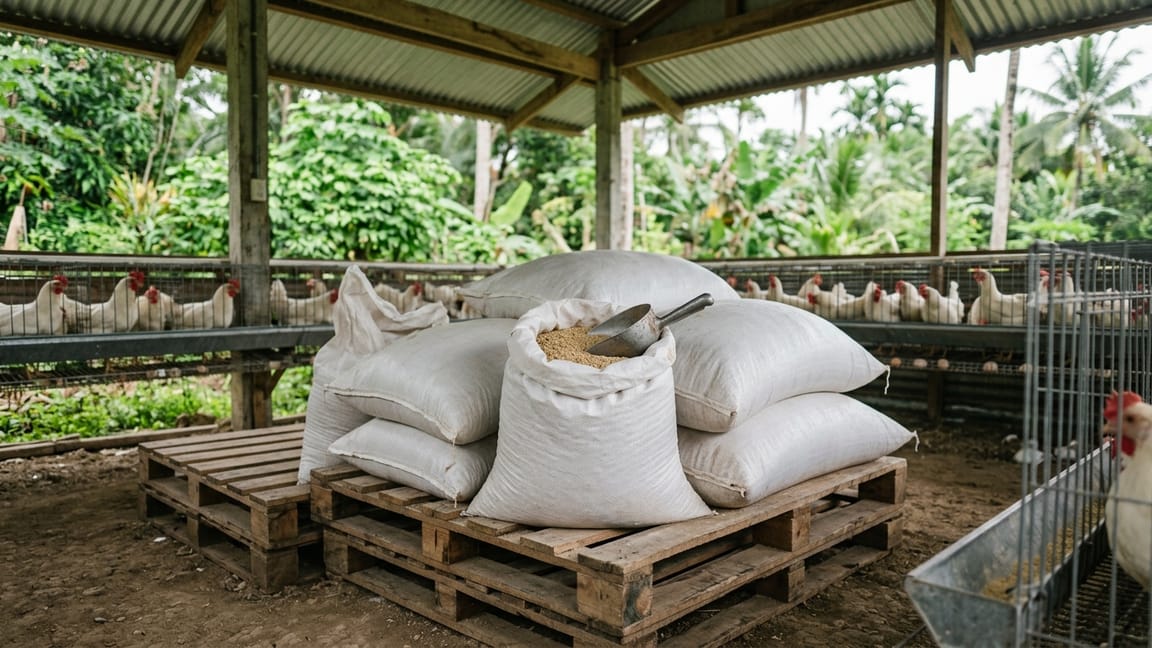
On most layer farms, feed is the single biggest expense — often well over half of what it costs to run the farm. Small changes in how much feed is used, or what it costs, move your profit more than almost anything else. Yet feed is usually bought in sacks and recorded in kilos, which makes it easy to lose track of.
Step 1: turn the sack price into a price per kilo
Formula
Cost per kilo = sack price ÷ sack weight (kg)
Sacks come in different sizes — 25 kg and 50 kg are common — and the price per sack varies by supplier and formulation, so always work from your own receipts. As an example, a 50 kg sack bought for ₱1,450.00 costs ₱29.00 per kilo.
Step 2: record the feed you actually use
Record the kilos fed each day, per flock. Purchases tell you what you spent; usage tells you what the flock consumed, which is what your cost per egg should be based on. The difference between the two — feed bought but not used — is stock on hand, or waste.
Step 3: check feed per hen per day
Formula
Feed per hen (kg) = feed used ÷ hens present
A laying hen typically eats roughly 100–130 grams of feed per day, depending on breed, body weight, the stage of lay, and the weather. Your breed's management guide will give a more precise target.
- Well above the range often points to spillage, rodents, or feeders that are filled too high.
- Well below it can mean hens aren't eating — heat, illness, or a problem with the feed itself — and usually shows up in laying rate a few days later.
A worked example
| Hens present | 1,000 |
| Feed used today | 115 kg |
| Feed per hen | 115 g |
| Cost per kilo | ₱29.00 |
| Feed cost today | ₱3,335.00 |
| Eggs collected | 870 |
| Feed cost per egg | ₱3.83 |
| Feed per egg | 132 g |
Feed per egg is worth watching on its own: it measures how efficiently the flock turns feed into eggs, regardless of what the feed costs. If it rises while the feed price stays the same, the flock is eating more for the same output.
Feed tracking in LayerFlow
In LayerFlow you can enter feed cost per kilo directly, or give the sack size and sack price and let it work out the cost per kilo for you. Daily usage feeds straight into your cost per egg and estimated operating profit. Read next: how to calculate your cost per egg.