Pricing Eggs by Size and by the Tray: A Practical Guide
Why eggs are sold by size in the Philippines, how to sort and record them, and how to set tray prices that cover your costs for every size.
LayerFlow team6 min read
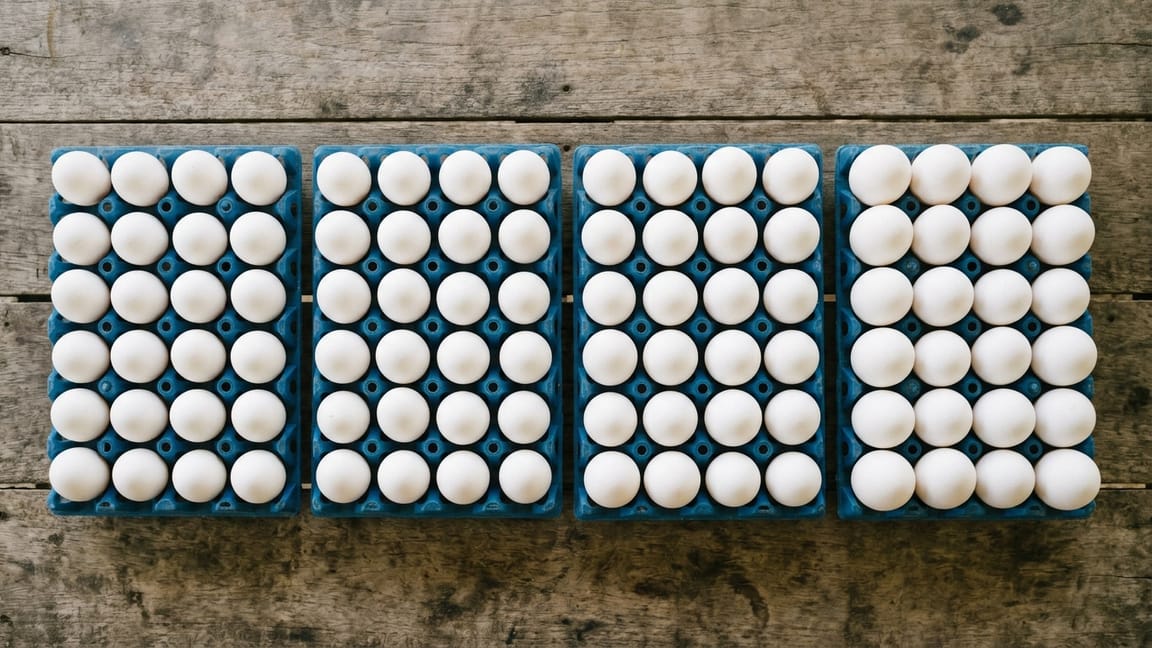
In the Philippines, table eggs are usually graded by size and sold by the tray of 30. Bigger eggs command higher prices — but your cost to produce them is roughly the same per egg. That makes your size mix, and how you price each size, a real lever on your farm's income.
Sort by weight, consistently
Sizes are graded by the weight of the egg. Common labels run from Small through Medium, Large, and Extra Large up to Jumbo, and some buyers use additional grades below Small. Agree the weight bands with your regular buyers, and weigh a sample regularly so your graders stay consistent — a tray of "Large" that's really mixed sizes costs you trust.
As hens age, their eggs tend to get bigger while the number of eggs falls. So expect your size mix to shift over a flock's life — and your average price per tray with it.
Know your cost per tray first
Before you price anything, know what a tray costs you to produce. If you haven't worked it out yet, start with how to calculate your cost per egg. That's your floor: across all sizes, you need to sell above it.
Work out your average price per tray
Formula
Average tray price = Σ (share of eggs in each size × tray price for that size)
Here's an illustrative example. The prices below are made up for the sake of the arithmetic — egg prices vary widely by region and season, so use what your buyers actually pay.
| Size | Share of eggs | Tray price |
|---|---|---|
| Small | 15% | ₱200.00 |
| Medium | 30% | ₱215.00 |
| Large | 30% | ₱230.00 |
| Extra Large | 18% | ₱245.00 |
| Jumbo | 7% | ₱260.00 |
| Average | 100% | ₱225.80 |
With a cost of ₱182.98 per tray, this farm earns about ₱42.82 per tray on average — but notice that its Small eggs earn far less than its Jumbo eggs. If the mix shifted toward smaller eggs, its margin would shrink even though the prices hadn't changed.
Practical pricing tips
- Review prices when costs move. A feed price increase raises your cost per tray straight away. Recheck your margin per size, not just the average.
- Price broken and dirty eggs separately, or not at all — and record them, so they don't silently drag down your numbers.
- Know who owes you. Selling on credit to regular customers is common; keep a running balance so a good month on paper is also a good month in the bank.
Sizes and pricing in LayerFlow
LayerFlow records each day's collection by size, keeps egg stock per size, and lets you set a tray price for each one. Sales can be recorded by the tray or by the egg, to a customer on file or a walk-in, paid or on credit. See all features or pricing.